

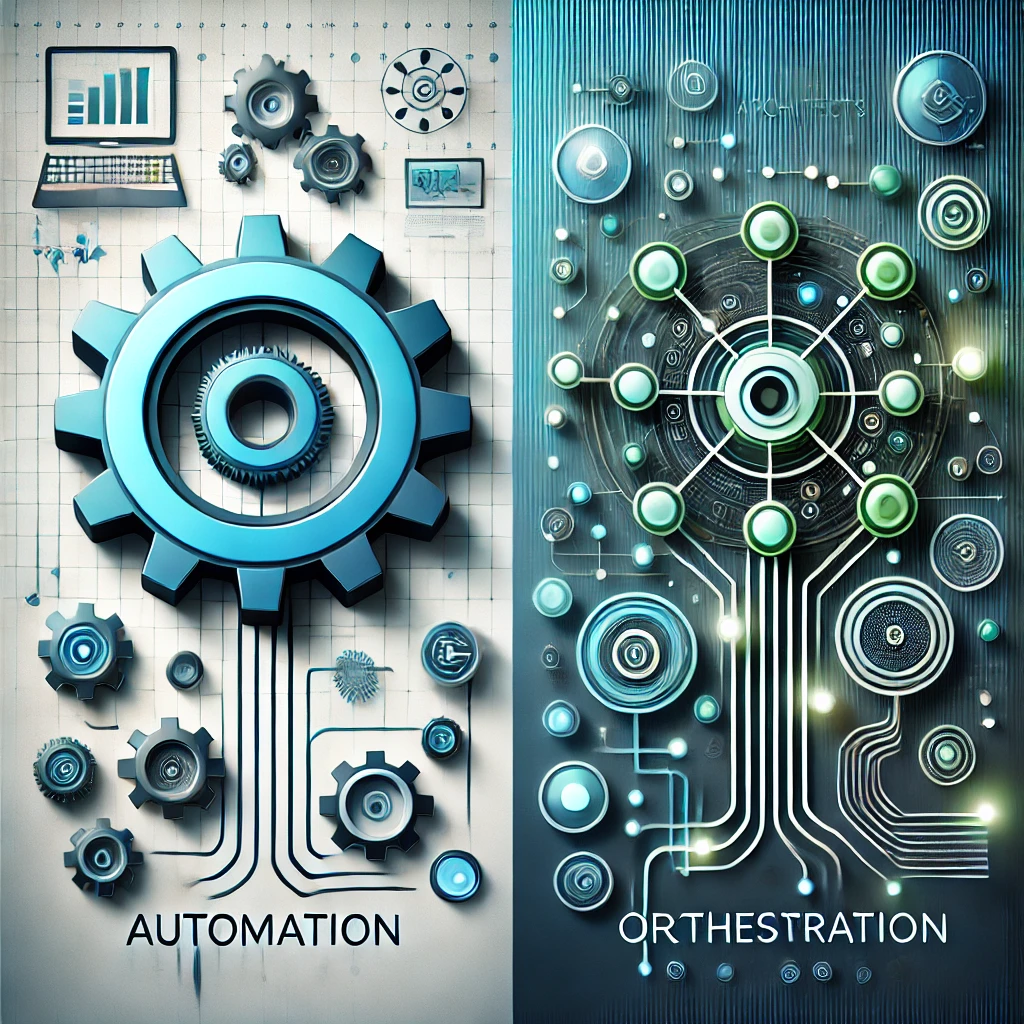
Automation and orchestration are the buzzwords that evolved with cloud computing, DevOps, and the modernization of IT. These two notions, though very often used synonymously, mean something different in IT operations. Being able to differentiate between automation and orchestration will allow the IT professional, cloud designer, and each tech-savvy individual to make better decisions and be more productive while working in a digital environment.
Automation versus orchestration, the difference in their roles, some of the technologies at play, and a vision toward what the future may hold for these revolutionary concepts are discussed in the following blog.

The Evolution from Manual Management to Automation and Orchestration
The old way of doing IT operations included the configuration and management of each server, application, and network component individually. Often these were unwieldy, error-prone, and unable to scale with growing digital ecosystems. Over time, automation emerged to save IT teams from such repetitive tasks and hence helped hasten the process.
As organizations matured in their automation journey, they realized that orchestrating these individual automated tasks could create a smooth, efficient workflow across different parts of their infrastructure. This begot the concept of orchestration: where multiple automated tasks are sequenced and coordinated to achieve a broader objective.

Key Technologies and Concepts
Let’s break down the technologies and concepts that play pivotal roles in automation and orchestration, helping us understand how they complement each other.
Automation
Automation is the process of creating tasks that execute without manual intervention. In IT, automation handles repetitive, low-level tasks, freeing up human resources for more complex decision-making.
- Example: Setting up a script to deploy software updates automatically across all machines in a network.
Orchestration
Orchestration takes automation a step further by connecting and coordinating multiple automated tasks to create a larger, cohesive workflow. It’s especially critical in environments with many interdependent processes, such as cloud environments and containerized applications.
- Example: Orchestrating the deployment of an application, which includes automated tasks like setting up servers, configuring the database, deploying the code, and performing testing.
Infrastructure as Code (IaC)
IaC is the practice of managing and provisioning infrastructure using code. IaC enables IT teams to automate and orchestrate infrastructure setups, making environments easier to scale, replicate, and maintain.
- Technologies: Terraform, AWS CloudFormation, and Azure Resource Manager.
Containers and Container Orchestration
Containers allow applications to run consistently across different environments. Container orchestration, managed by platforms like Kubernetes, automates the deployment, scaling, and management of containerized applications.
- Technologies: Docker for containers, Kubernetes for orchestration.
Workflow Automation Tools
These tools allow the automation and orchestration of workflows across applications and platforms, bringing together various automated tasks in a structured, rule-based manner.
- Technologies: Jenkins, Apache Airflow, and Zapier for various automation needs.
Benefits of Automation and Orchestration
Automation and orchestration offer significant benefits, each contributing uniquely to enhanced operational efficiency, resource optimization, and business agility.
Increased Efficiency and Reduced Errors
- Automation: Automating repetitive tasks minimizes the risk of human error and accelerates task completion.
- Orchestration: By managing dependencies and workflows, orchestration ensures that each task executes correctly, eliminating configuration errors.

Scalability and Flexibility
- Automation: Allows for scalability by automating tasks as workloads increase, especially useful in cloud environments.
- Orchestration: Facilitates the scaling of complex, multi-step workflows, enabling IT teams to handle larger projects without added complexity.

Cost Savings
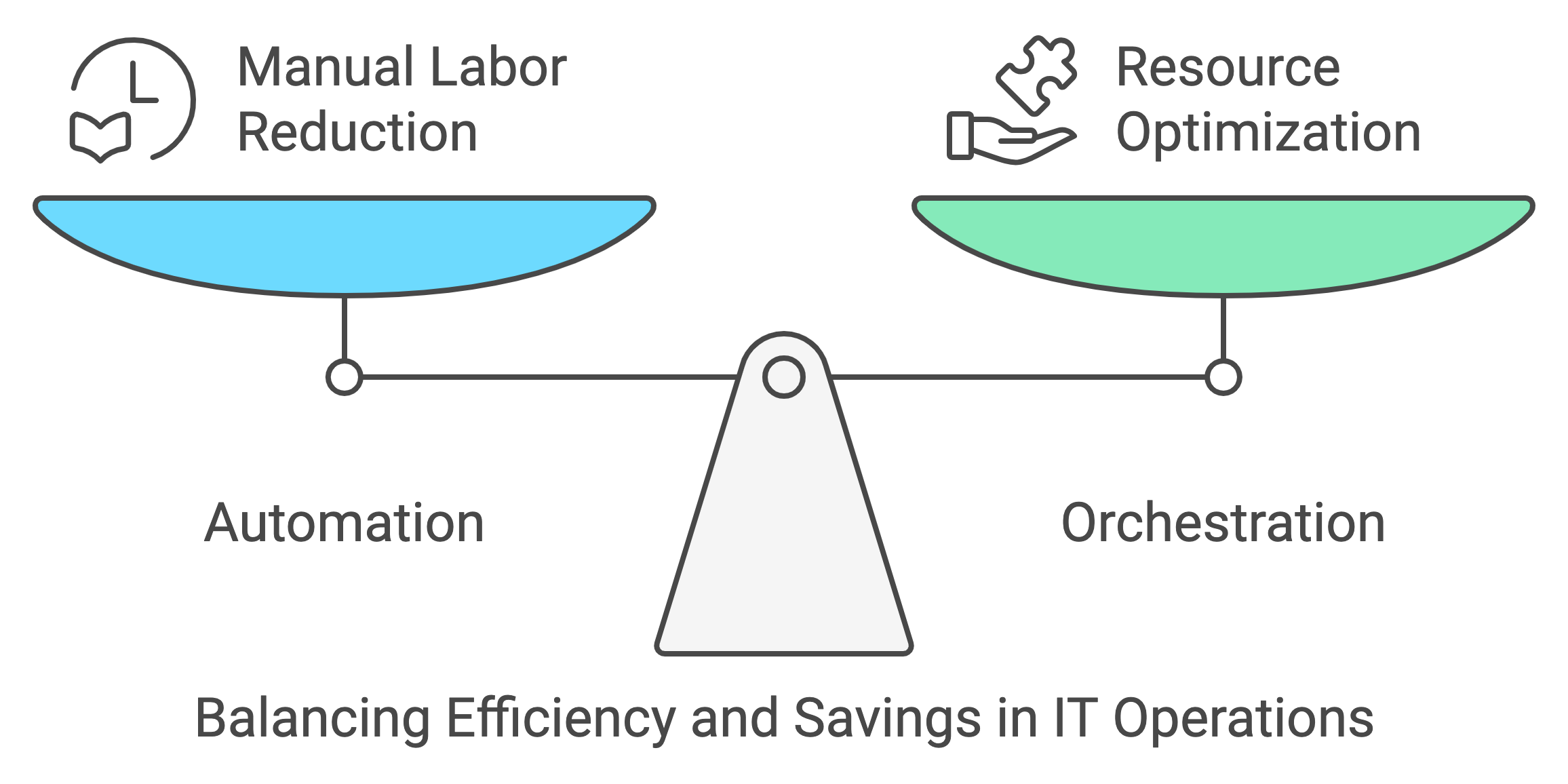
- Automation: Reduces the need for manual labor on routine tasks, freeing up resources for more strategic initiatives.
- Orchestration: Helps optimize resource allocation, automating infrastructure setup only when needed, which can lead to significant savings.
Enhanced Security and Compliance
- Automation: Enforces security protocols consistently, such as automated patching or compliance checks.
- Orchestration: Ensures that security policies are integrated across different stages of the workflow, creating an end-to-end compliance strategy.

Conclusion:
Automation and orchestration are names of the games in dynamically changing IT and cloud infrastructure to keep up with the pace related to the growing complexity, optimization of resources, and operational agility. While automation handles different tasks at an individual level, orchestration connects different tasks together and coordinates them into logical workflows that push the level of efficiency and control even higher.
This is possible through the fact that IT experts and cloud architects develop more robust, scalable, and economical systems by leveraging these technologies. As automation and orchestration grow, organizations that understand and implement these concepts will only then be better prepared to survive in a fast-evolving digital world.
Key Takeaways:
- Automation and orchestration are distinct yet complementary, with automation handling specific tasks and orchestration managing workflows.
- Real-world examples illustrate how automation and orchestration can enhance efficiency, scalability, and security across various industries.
- As new trends emerge, including AI-driven automation and multi-cloud orchestration, the landscape will continue to evolve, offering exciting possibilities for IT professionals.
Understanding the roles of automation and orchestration is not just a technical skill—it’s a strategic advantage. By embracing these technologies, businesses can create more agile, adaptable, and intelligent IT environments ready to tackle the challenges of tomorrow.
