

As IT environments grow and hybrid architectures become more common, traditional ways of doing things have a hard time keeping up. This is where Intelligent Automation (IA) comes in. It’s a revolutionary way to combine AI with operational workflows to make systems that are not only automated, but also more and more independent.
This blog post looks at two important parts of IA in IT operations: – AIOps (Artificial Intelligence for IT Operations) and Agentic Intelligent Automation.
Let’s take them apart and look at how they are changing ITOps.
AIOps: From Noise to Knowledge
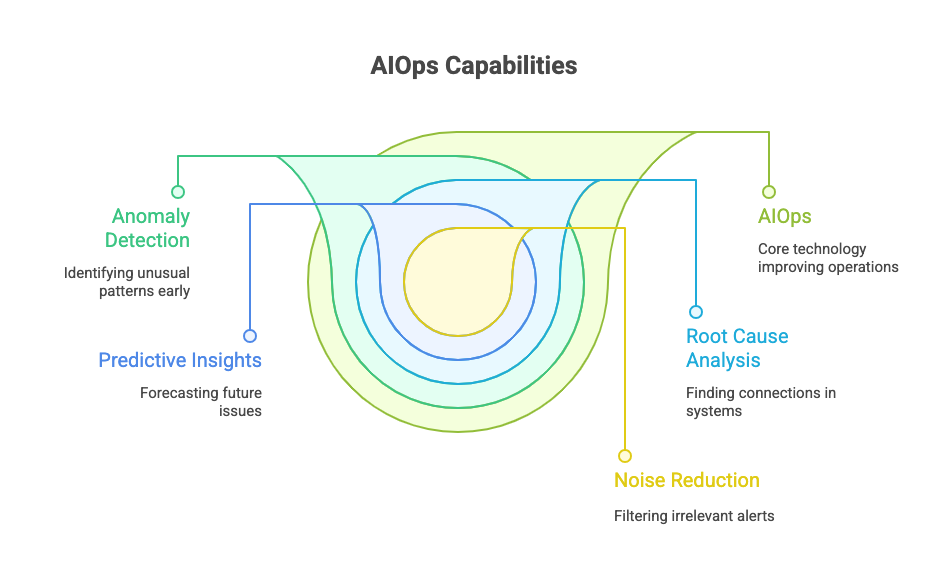
AIOps uses big data analytics and machine learning to improve and partly automate important operational tasks. It takes in huge amounts of telemetry, logs, and events to give:
- Anomaly detection is the process of finding changes in normal behavior before they turn into problems.
- Root Cause Analysis: Looking for connections between signals in infrastructure, applications, and services.
- Predictive Insights: Predicting outages, slowdowns in performance, or capacity problems.
- Noise Reduction: Getting rid of alerts that are not needed or that don’t lead to action.
AIOps does not mean getting rid of human workers. It’s about giving them tools that can handle scale and complexity at machine speed.
A real-world example is an e-commerce company that uses AIOps to find a 40% drop in checkout transactions in just a few seconds. Instead of alert storms, a single correlated insight points out a spike in payment gateway latency, letting the SRE team know about the problem before customers do.
Agentic IA: More Than Just Playbooks
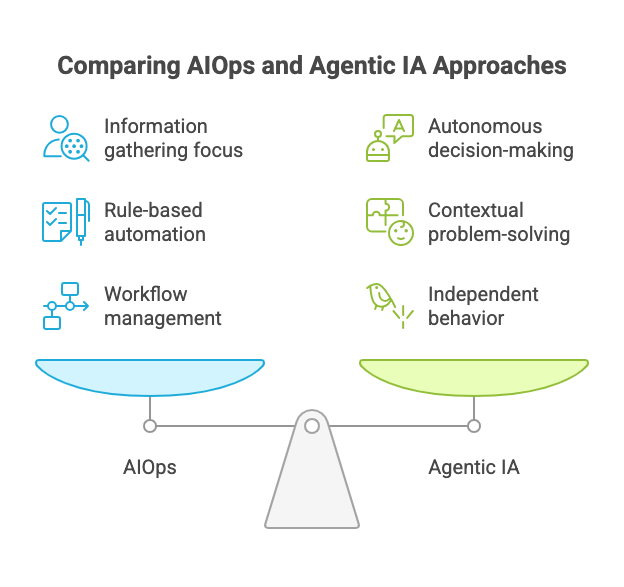
AIOps is all about getting information, while Agentic IA is all about making decisions and carrying them out.
These systems use smart agents that work on their own and use policy-driven logic to do things like automatically fixing common problems (like restarting services). – Rebalancing workloads based on current conditions – Response that works together across all levels of infrastructure.
Unlike traditional automation, which follows set rules, agentic systems think about the situation and make decisions based on it within certain limits.
Why it matters? Agentic IA is a change from automated workflows to behavior that is independent. This makes things more resilient, lowers MTTR, and lets human teams work on harder problems.
Putting It All Together: Human-in-the-Loop
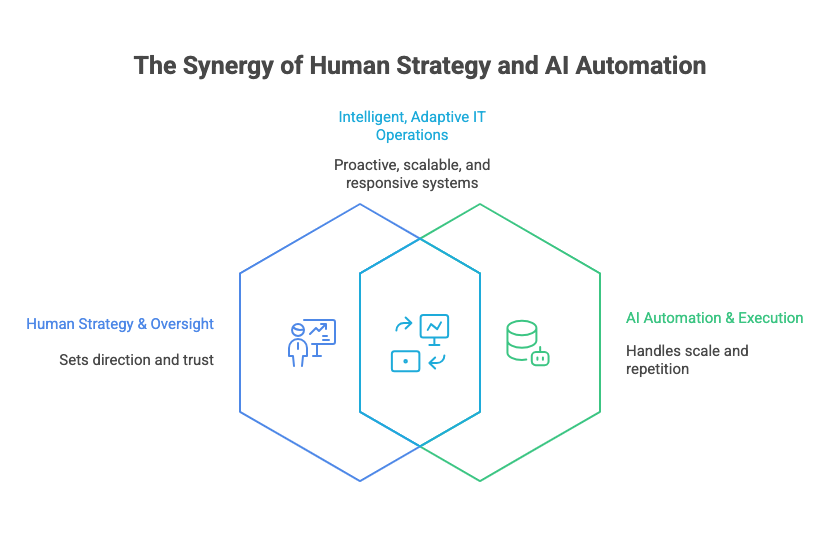
The best way to use IA in IT operations is to find a balance between people setting the strategy, policies, and trust limits. – Machines take care of the size, speed, and repeated actions.
AIOps and Agentic IA work together to make operational systems that are: – proactive instead of reactive – able to grow without adding more employees – Able to change with changing conditions
The future of IT operations is smart, agentic, and collaborative, whether you’re in charge of on-prem data centers, a hybrid cloud, or a lot of microservices.
Last Thoughts
IA isn’t just a buzzword; it’s something that modern IT environments need to do. AIOps lets you see and hear. Agentic IA gives you quick reflexes.
They work together to help IT teams do more than just react to change; they help them see it coming and shape it. The companies that adapt to this change will not only make their operations more efficient, but also smarter.
