

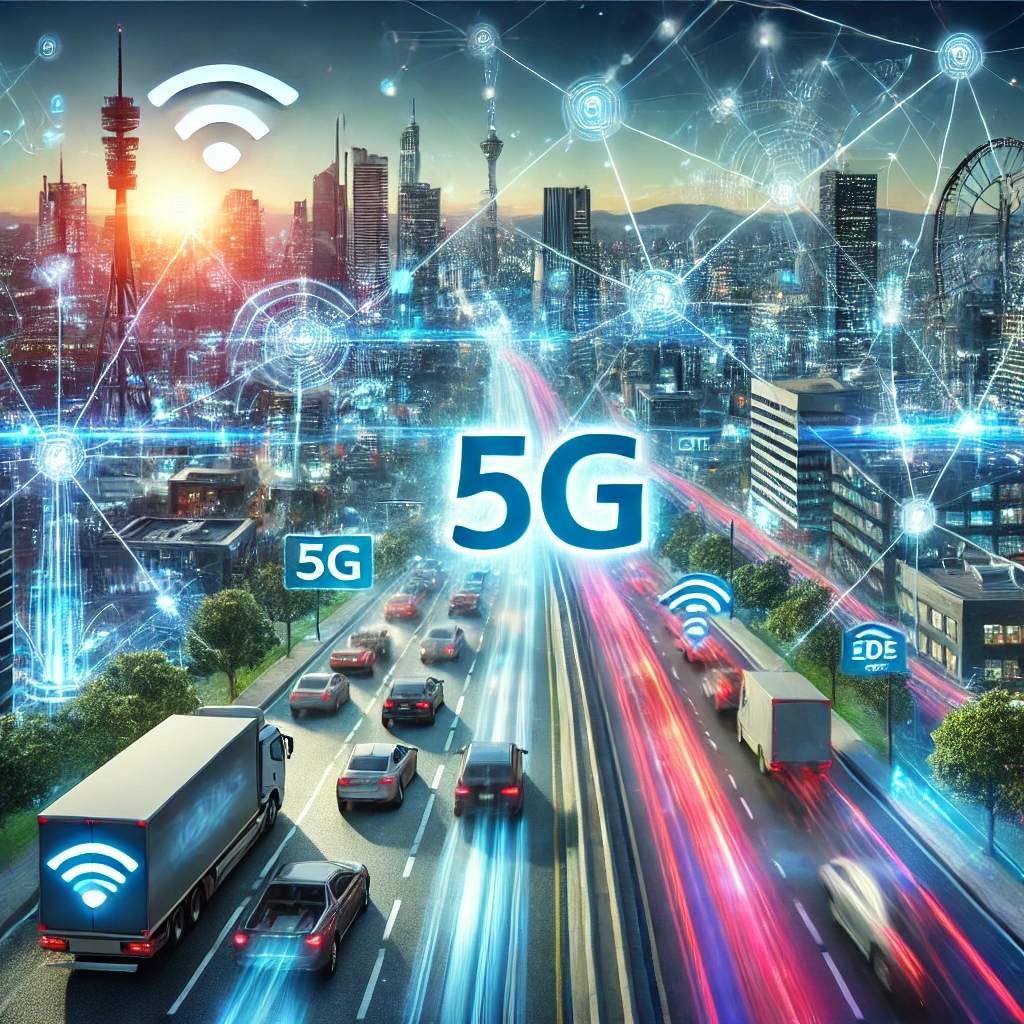
From the buzzwords of the future, 5G technology has emerged as a transformation force in today’s connected world. Its deployment in industries is reshaping communication, work modes, and lifestyles. With 5G enabled, faster speeds are wading their way, while ultra-low latency and massive connectivity open unparalleled opportunities in IoT and edge computing.
As 5G networks expand globally, their potential to revolutionize IoT and edge computing is becoming a reality. Let’s explore how this technology is shaping the future.
Key Technologies Driving Change
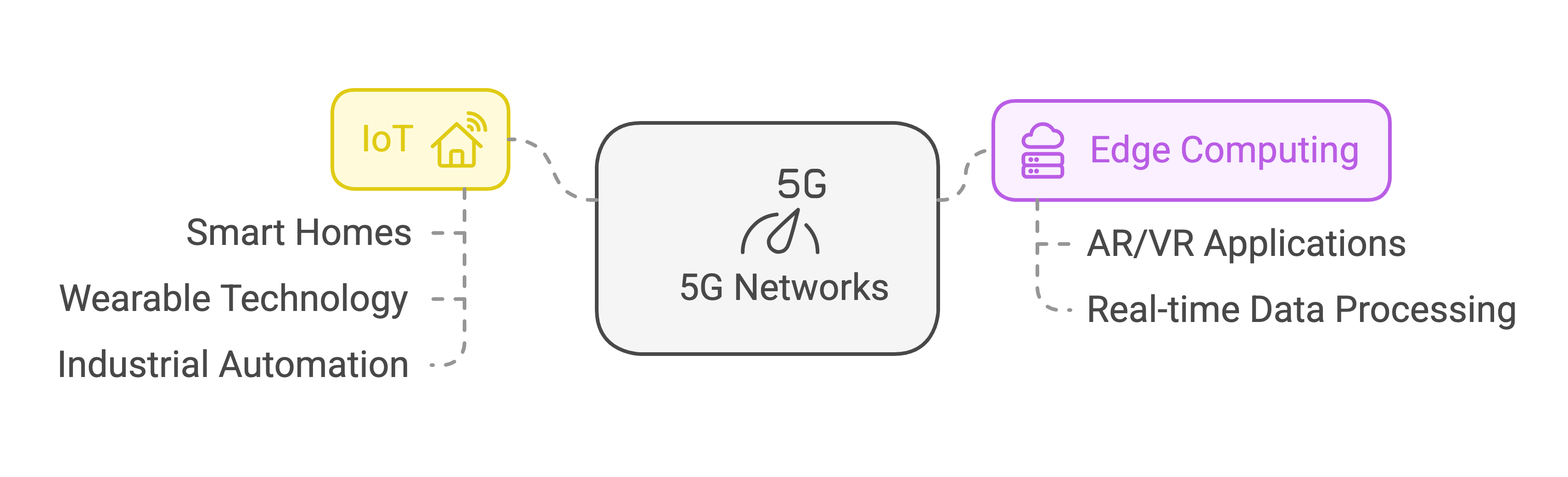
5G Networks
- What It Is: The fifth generation of cellular technology, providing high-speed, low-latency, and reliable connectivity.
- Capabilities: Supports speeds up to 100 times faster than 4G, with latency as low as 1 millisecond.
- Example: Picture a 5G-enabled video conference where seamless, high-definition streaming occurs even in densely populated areas.
IoT (Internet of Things)
- What It Is: A network of interconnected devices capable of sharing and analyzing data in real time.
- Capabilities: Enables smart homes, wearable tech, industrial automation, and more through real-time connectivity.
- Example: Imagine connected vehicles exchanging data with traffic systems to optimize routes and reduce congestion.
Edge Computing
- What It Is: A decentralized approach to data processing where computations happen close to the data source.
- Capabilities: Reduces latency and bandwidth usage by processing data locally rather than in centralized data centers.
- Example: Edge computing powers AR/VR applications, ensuring real-time data processing for immersive user experiences.
Unleashing Benefits
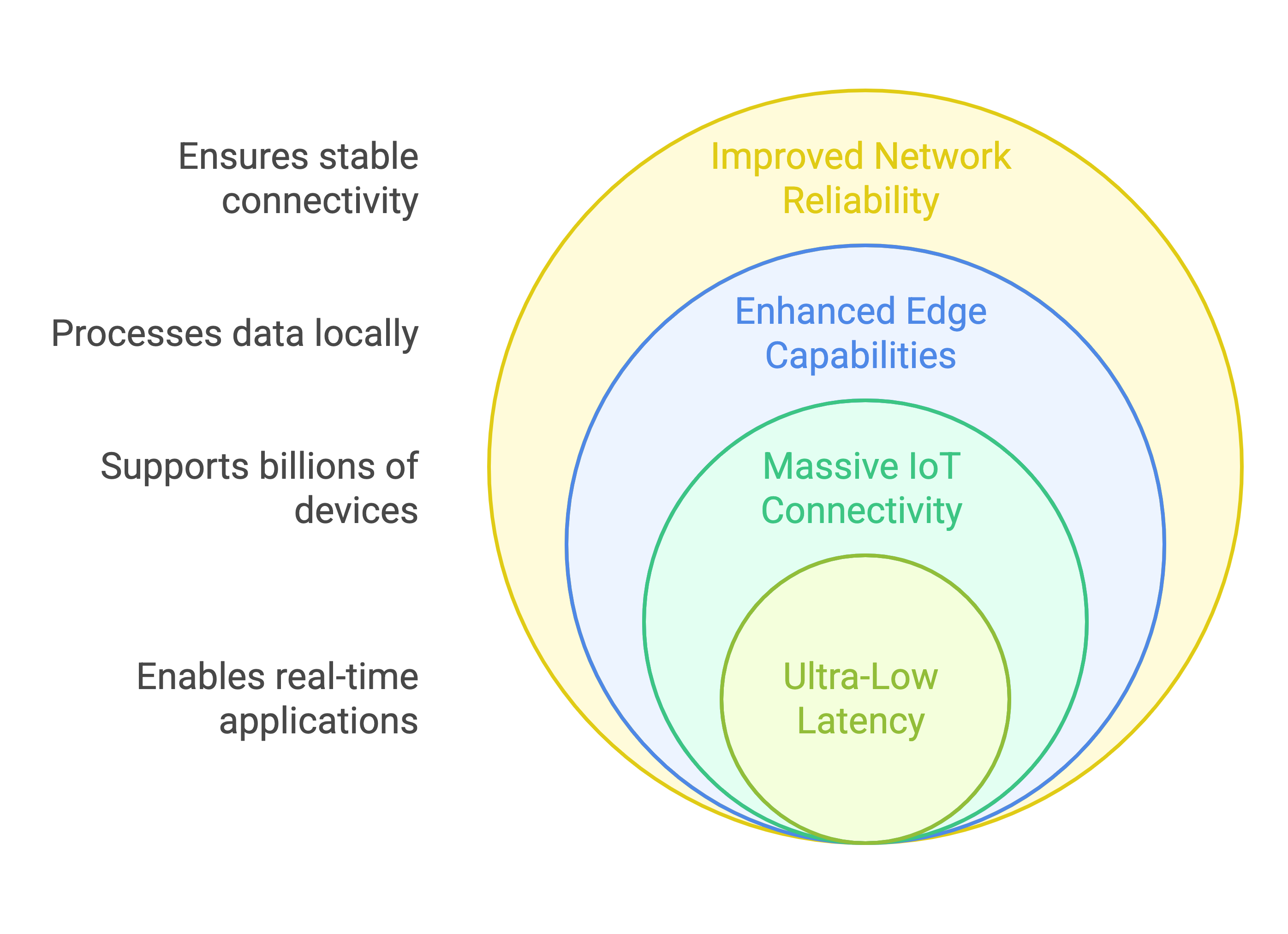
Ultra-Low Latency
- Impact: Real-time applications like autonomous vehicles and remote surgery are now feasible.
- Example: A smart city equipped with 5G can implement adaptive traffic light systems that respond to real-time vehicle flow, reducing congestion and accidents.
Massive IoT Connectivity
- Impact: 5G supports billions of devices in dense environments without performance loss.
- Case Study: A smart factory leverages 5G to monitor machinery, predict maintenance needs, and optimize workflows, boosting productivity and reducing downtime.
Enhanced Edge Capabilities
- Impact: Local data processing improves efficiency and reduces reliance on centralized data centers.
- Example: Retail stores use edge computing to deliver personalized shopping experiences while maintaining data privacy.
Improved Network Reliability
- Impact: Ensures stable, mission-critical connectivity for essential services.
- Scenario: During natural disasters, emergency services use 5G for real-time coordination and seamless communication among responders.
Challenges to Overcome
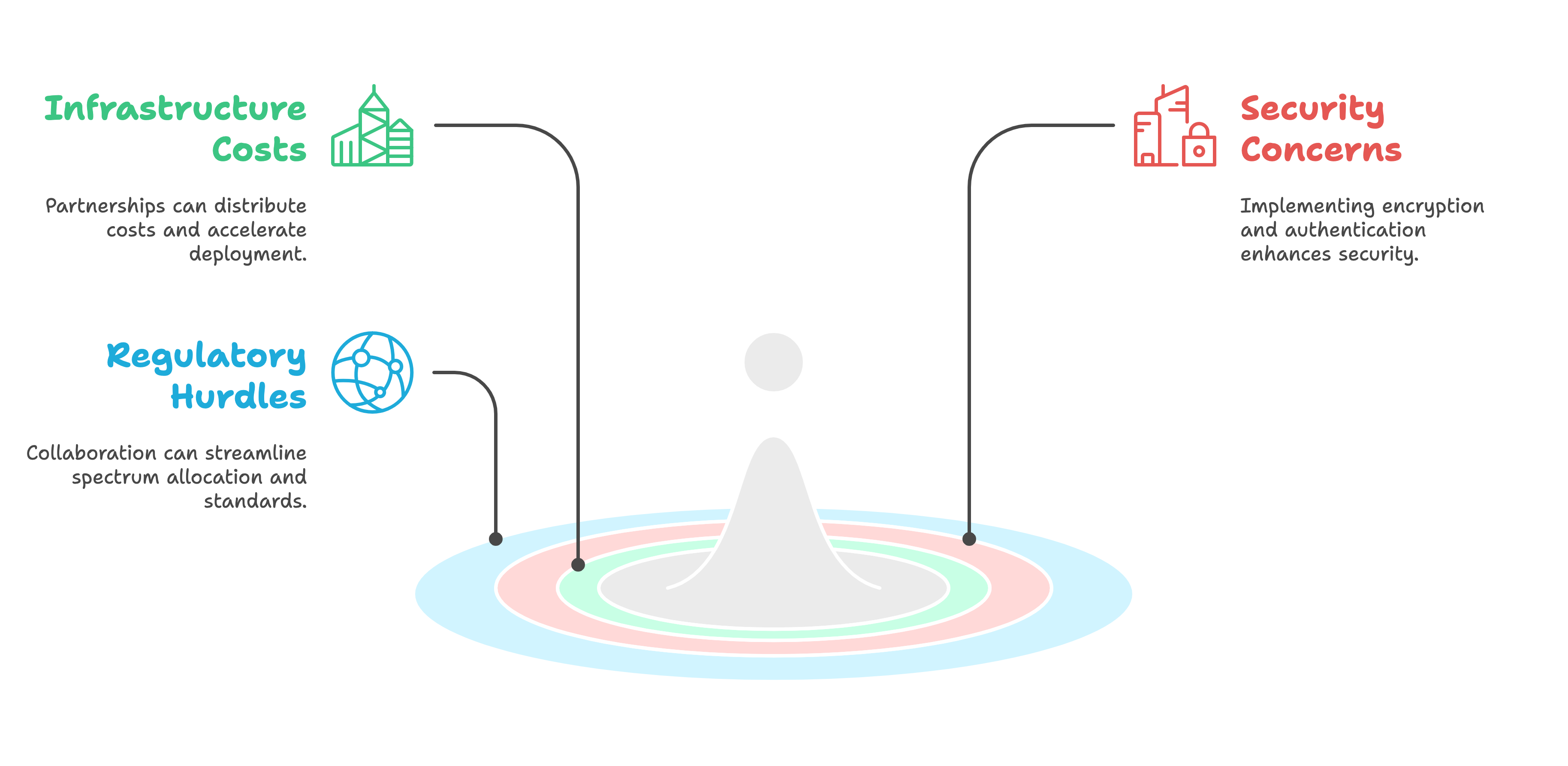
Infrastructure Costs
- Issue: Deploying and maintaining 5G infrastructure is expensive.
- Solution: Partnerships between governments, private sectors, and cloud providers can share costs and accelerate deployment.
Security Concerns
- Issue: A higher number of connected devices increases vulnerability to cyberattacks.
- Solution: Implement robust security measures, including end-to-end encryption and secure device authentication.
Regulatory Hurdles
- Issue: Spectrum availability and inconsistent global regulatory frameworks slow adoption.
- Solution: Collaboration between governments and private sectors can streamline spectrum allocation and establish universal standards.
Future Trends Shaping the Landscape
6G on the Horizon
- What to Expect: Early research into 6G promises faster speeds and advanced AI capabilities.
- Applications: Holographic communications and enhanced industrial automation precision.
5G-Powered AI
- Advancement: AI systems can leverage 5G’s high bandwidth and low latency for real-time decision-making.
- Example: Autonomous drones using AI and 5G for efficient delivery services.
Widespread IoT Adoption
- Potential: Healthcare, agriculture, and manufacturing industries will experience exponential IoT growth.
- Example: Smart irrigation systems in agriculture, reducing water waste and boosting crop yields.
Cloud and Edge Integration
- Synergy: 5G will unify cloud and edge platforms, streamlining business operations.
- Example: Logistics companies leveraging 5G and edge computing to track inventory in real time.

Conclusion
5G is not just about a faster network; it’s a transformative force that redefines the whole approach toward connectivity, data processing, and automation. Its influence on IoT and edge computing is opening up a world of innovation that was previously only the stuff of science fiction.
There is enormous potential with 5G, and as the technology matures, the impact will be in redefining industries, driving innovation, and ultimately improving lives worldwide.
